
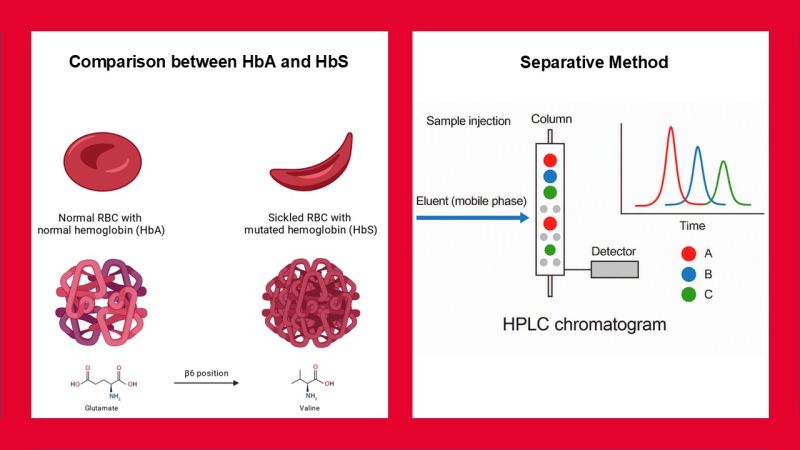
Haemoglobin variants remain an important focus in diagnostic hematology. While HbS is most commonly detected in the heterozygous state (sickle cell trait), its presence in the homozygous state can lead to severe clinical consequences and significantly impact patients’ quality of life.
An often-overlooked factor is the analytical method used for detection. Accurate identification of haemoglobin variants relies heavily on the technology employed. Separation-based techniques such as HPLC and electrophoresis provide clear fraction separation, enabling reliable differentiation between:
• HbS
• HbC
• HbD (including D-Punjab)
• HbE
• O-Arab
As haemoglobin variants continue to be both prevalent and clinically significant, advanced separation technologies such as HPLC remain essential for delivering accurate, reliable, and clinically actionable results.